The Ultimate Test: Can You Really Tell The Difference Between Moissanite And Diamond?
Have you ever found yourself staring at a sparkling piece of jewelry, wondering if it’s a diamond or moissanite? You’re not alone! The beauty of these two gemstones can sometimes blur the lines, leaving many people in a delightful dilemma. Let’s take a closer look at both options so you can confidently identify and appreciate their differences.

Understanding Moissanite and Diamond
Before we jump into the differences, it’s important to get a fundamental understanding of what each gemstone is. By doing so, you’ll appreciate their unique qualities and characteristics.
What is Moissanite?
Moissanite was first discovered in 1893 by the French chemist Henri Moissan. He stumbled upon this remarkable mineral while examining a meteorite. Although moissanite is often thought of as a synthetic stone today, its origins from outer space add a cosmic touch to its allure.
Moissanite is composed of silicon carbide, which gives it its incredible sparkle. Interestingly, while natural moissanite is exceedingly rare, most of the stones available in the market today are lab-created. This ensures that they are ethically sourced and more affordable than diamonds.
What is Diamond?
Diamonds, on the other hand, are made of pure carbon and formed under extreme pressure and temperature, deep within the Earth’s mantle. Recognized for their brilliance and beauty, diamonds have been cherished through history. They are often associated with love and commitment, making them a popular choice for engagement rings.
Natural diamonds can be quite rare, resulting in a wide range of prices depending on their quality and size. They come in various colors, although colorless diamonds are the most sought after.
Are They Really That Similar?
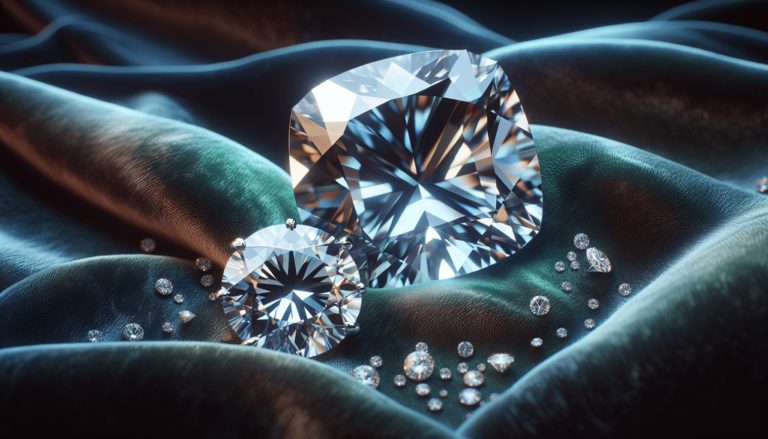
At first glance, you might find it hard to distinguish between moissanite and diamond. Their refractive properties and sparkle can be remarkably similar, which raises the question: How can you tell them apart?
Crystal Structure
Let’s discuss the crystal structures. Diamonds have a cubic crystal structure, which contributes to their exceptional hardness and brilliance. Moissanite, however, has a hexagonal crystal structure. This subtle difference showcases slight variations in the way both stones reflect and refract light.
Hardness and Durability
Both moissanite and diamond are incredibly hard. On the Mohs scale of mineral hardness, diamonds rate a perfect 10, while moissanite hovers around 9.25. This means that while diamonds are the hardest known natural material, moissanite is still an excellent choice for jewelry due to its durability.
Fire and Brilliance
When it comes to fire and brilliance, moissanite has a reputation for being even more sparkly than diamonds. The refractive index of moissanite is higher, which allows it to break light into a spectrum of colors, creating a display that many people find captivating. Diamonds, while beautiful, have a slightly lower refractive index, giving them a different kind of sparkle.
Table: Comparison of Fire and Brilliance
| Gemstone | Refractive Index | Sparkle Effect |
|---|---|---|
| Moissanite | 2.65 – 2.69 | More colorful and fiery sparkles |
| Diamond | 2.42 – 2.43 | Classic brilliance |
Recognizing Visible Differences
Now that you have a foundation of knowledge, let’s discuss how to physically identify moissanite and diamond.
Sparkle and Scintillation
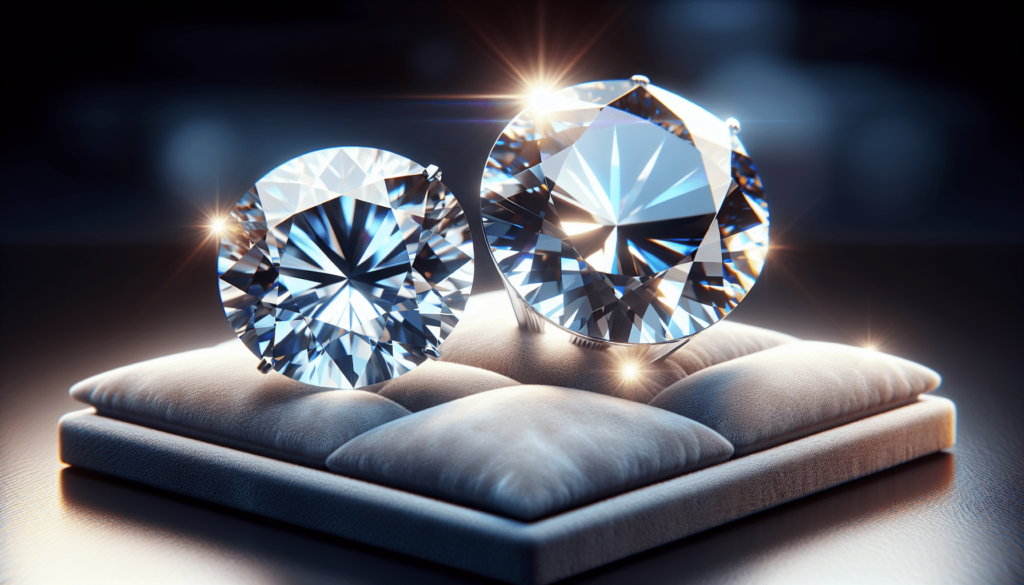
One of the most noticeable differences lies in their sparkle. While both gemstones reflect light beautifully, moissanite is known for its “disco ball” effect. This means it emits more colorful flashes of light due to its unique optical properties, while diamonds tend to reflect white light, creating a more elegant and classic appearance.
Color Assessment
When examining color, it’s important to note that diamonds are graded on a color scale, ranging from D (colorless) to Z (light yellow or brown). Moissanite generally has a slightly warmer hue, particularly in the colorless range. If you hold a moissanite stone next to a diamond of the same color grade, you might observe a hint of yellow in the moissanite.
Flaws and Inclusions
Both gemstones can have inclusions or flaws, but the type and visibility of these imperfections can vary. Diamonds are often graded according to the clarity scale, with visible inclusions affecting their value. Moissanite stones, when created in a lab, usually have fewer inclusions.
If you’re interested in inspecting the stone closely, you can use a jeweler’s loupe or magnifying glass to illuminate these details.
Engaging Methods to Differentiate
You might be curious about practical methods to test for these differences. Here are a few simple techniques to help distinguish moissanite from diamond.
The Fog Test
One way to determine whether a stone is moissanite or diamond is through the fog test. Simply breathe on the stone and watch how it reacts. If the stone stays fogged for an extended period, it’s likely moissanite. A diamond, due to its superior thermal conductivity, will clear up almost immediately.
The Water Test
Another fun method is the water test. Fill a glass with water and drop the stone in. A moissanite will float, while a diamond will sink because of its higher density.
The UV Light Test
Many diamonds fluoresce under UV light, exhibiting a blue or whitish glow. On the other hand, most moissanites do not fluoresce or exhibit a yellow-green glow. This test can provide a quick way to assess the stone.
The Cost Factor
One of the major attractions of moissanite is its affordability. Generally, moissanite can be significantly less expensive than diamonds, making it a popular choice for budget-conscious shoppers.
Price Comparison
| Gemstone | Average Cost per Carat |
|---|---|
| Moissanite | $300 – $800 |
| Diamond | $1,500 – $15,000+ |
As you can see, the price difference is quite substantial. If you’re looking for a larger stone without the hefty price tag, moissanite is certainly worth considering.
Ethical Considerations
In an age where ethical concerns regarding sourcing and sourcing methods are becoming burgeoning discussions, many are turning toward moissanite for its ethical appeal. Since most moissanite is lab-created, it avoids the ethical dilemmas often associated with natural diamonds, including conflict diamonds.
The Effect of Origin on Value
Ethics can also affect market value. Natural diamonds that are ethically sourced are typically valued higher due to their rarity and the story behind their extraction. In contrast, moissanite, being lab-created, carries a different narrative, emphasizing sustainability and clarity in sourcing.
Caring for Your Gemstone
Regardless of which stone you choose, caring for your gemstone is essential to maintain its sparkle and brilliance. Fortunately, both moissanite and diamond are relatively easy to care for.
Cleaning Moissanite and Diamond
You can clean both moissanite and diamonds with a gentle soap solution and a soft brush. Avoid harsh chemicals that might harm the stones. An ultrasonic cleaner can also be used, but always check with your jeweler beforehand.
Storing Your Jewelry
When storing your gemstones, keep them in a soft pouch or a separate compartment to avoid scratches. Since moissanite is slightly softer than diamonds, it’s wise to take extra precautions to preserve its beauty.
Making the Choice
You may find yourself at a crossroads when deciding between moissanite and diamond. Each stone offers its unique attributes that cater to different preferences and values.
The Right Fit for You
To help with your decision-making process, you can consider the following factors:
- Budget: If you’re aiming for a larger stone without breaking the bank, moissanite might be your best choice.
- Ethics: If ethical sourcing is a priority for you, moissanite is a great alternative to natural diamonds.
- Sparkle Preference: Do you prefer the fiery brilliance of moissanite or the classic elegance of diamond?
Personal Sentiment
It’s essential to remember that the gemstone you choose should resonate with you personally. It can be about the sparkle, the ethical considerations, or simply the emotional connection you have with the piece. Whatever your preference may be, the right choice is the one that brings you joy.
In Conclusion
As you embark on your journey of choosing between moissanite and diamond, remember that both gems have their unique charm and beauty. Understanding their differences will empower you to make an informed decision that aligns with your style, beliefs, and budget.
Next time you’re admiring a piece of jewelry, you’ll be equipped with the knowledge to distinguish between these two captivating gemstones confidently. Whether you end up with the brilliance of a diamond or the fiery charm of moissanite, you’re sure to have a piece that will dazzle for years to come. Happy gemstone hunting!