Engagement Ring

  • Advantages of Diamond Rings Grown in Laboratories

    Lab created diamond rings come with advantages that appeal to individuals who care about the environment and those who value the allure of diamonds.

    Exploring the sourcing of conflict diamonds
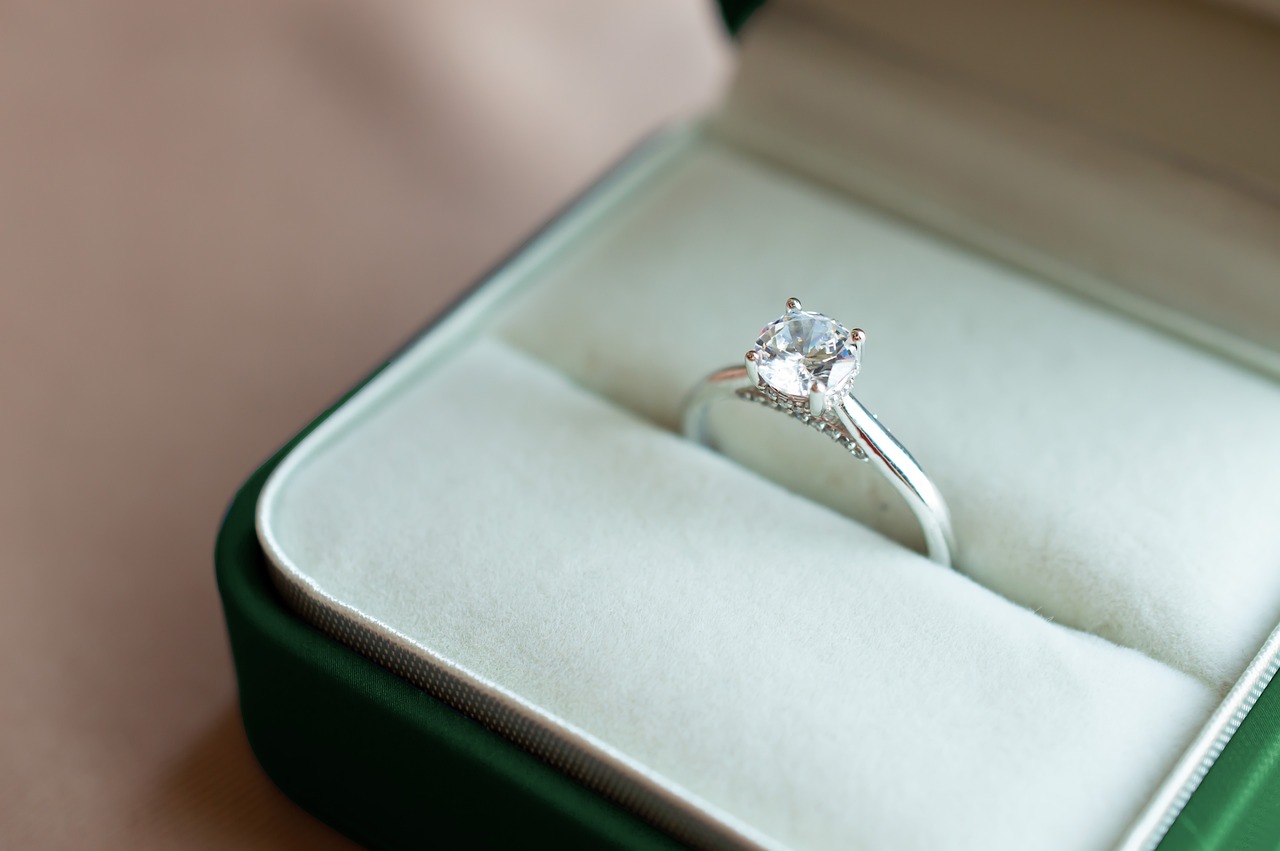
    Lab-created diamond rings offer a benefit in sourcing compared to mined diamonds. Unlike diamonds obtained through mining practices that may have ties to human rights violations and environmental harm, lab-grown diamonds are produced in controlled lab settings to guarantee conflict-free origins.

    Lab-created diamond rings provide an option for consumers who care about the environment’s well-being. Diamond mining can affect ecosystems due to deforestation and habitat destruction. Lab-grown diamonds offer an eco-choice as they require less energy and water during production and do not cause the same environmental harm as mined diamonds.

    Lab-created diamond engagement rings are frequently priced lower than those made from mined diamonds due to the intricacies of the diamond industry supply chain that encompasses mining operations and processing and distribution processes, leading to higher expenses overall. Conversely, lab-grown diamonds have the advantage of being manufactured within a regulated setting, possibly leading to reduced costs for buyers.

    Aesthetics

    Lab-created diamond rings possess quality and elegance comparable to natural diamonds. These gems undergo evaluation based on established industry criteria concerning coloration, transparency, faceting, and carat mass. Whether one admires the dazzling radiance of a diamond or the distinctive sparkle of an unconventionally shaped lab-grown stone, these selections present an impressive array of choices.

    Lab-created diamond rings provide a range of options for customization and artistic expression. Individuals can design personalized jewelry that mirrors their style and tastes by producing diamonds in various hues and dimensions. Whether opting for a classic solitaire or a contemporary three-stone arrangement, lab-grown diamonds empower you to craft original jewelry pieces. Learn More.

    The Upcoming Trends in Diamond Ring Production

    Lab-created diamond rings are becoming increasingly popular. They have a bright future ahead! With a rising consciousness around the social concerns of diamond mining practices, people are shifting towards lab-grown diamonds as a sustainable and ethical option compared to traditional ones. Renowned jewelry brands and stores are starting to incorporate lab-created diamonds into their offerings, helping solidify their market presence.

    Advancements in technology and research play a role in enhancing the quality of lab-grown diamonds over time as scientists refine production techniques to create better diamonds that may eventually become more accessible within the jewelry market.

    Lab-created diamond rings provide a choice for individuals seeking a representation of love and eco-friendliness. Lab-grown diamonds are revolutionizing the traditional diamond sector with their origins, conscious production methods, affordability, and diverse customization opportunities. As the popularity of lab-grown diamond rings grows among individuals seeking options for expressing love and commitment in their relationships, it is envisioned that these rings could symbolize not just affection but sustainability and ethical sourcing practices in the jewelry industry. Exploring design possibilities like combining shades of metal or mixing warm and cool tones in ring sets can offer unique and stylish alternatives to traditional jewelry. However, silver may not be the choice for diamond encrustation because it might not securely hold hard stones in place.…

  • How to choose a diamond engagement ring

    A diamond ring, whether an engagement or wedding ring, is not only a symbol of a critical decision, which will be followed by a life together with a girl to whom you are ready to entrust everything. The complexity of making a diamond ring remains invariably high; all production difficulties are associated with the stone that adorns it. A diamond ring can also be a stylish everyday accessory, which has nothing to do with marriage.

    There is an opinion among jewellers that once having made a ring for someone, you will see these people more than once, because after weddings there will be anniversaries, and in between there will be other holidays for which you can also give a ring. And, as you know, there are never too many of them.

    Is it necessary to go to jewellers and wait to manufacture your ring for many months? Not at all. Although involved in the serial production of diamond rings, well-known companies do it with dignity. And tasteful. You can make sure of this by scrolling through our catalog.

    Each person may have different knowledge about diamond rings, as well as ideas about the ring’s shape, appearance, stylistic features, and price. So let’s put them in order with our guide to choosing a diamond ring. Learn More.

    These tips will help you choose jewelry with an expensive stone if you have never done it before and have no idea what is essential to pay attention to in such cases.

    Check the certificate

    Diamond rings can be roughly divided into two groups: with stones up to 0.30 ct and more than 0.30 ct, where it is a carat, a conventional unit of measurement of the mass of the stone. Diamonds weighing 0.30 ct or more are certified by gemological laboratories, while rocks weighing less than 0.30 ct are usually not certified. Moreover, the certificate itself can be both for the entire jewelry and only for the stone.

    You can check any certificate by the number on the laboratory website that issued it. For huge stones, some laboratories duplicate the certificate number on the girdle (the part of the surface of the diamond that determines its shape).

    The most respected gemological center in the world is considered to be the GIA. This is the leader of the commercial valuation from the United States. Interestingly, certificates from the GIA office in the United States are valued much higher than certificates from the GIA office in India. In Russia, the GIA has yet to have a representative office.

    If a stone is certified by a gemological center in one country, it does not mean it was mined in the same region. It is standard for a stone to be mined and cut in one place and certified in another to confirm its high performance by a reputable gemological center.

    Evaluate the features

    What is usually written on certificates? Two scales are used to evaluate diamonds: color and quality (clarity). These characteristics are unity, immaculate and transparent color, and the quality of inclusions inside the stone, represented by graphite dots and cracks.

    Remember the tricks of manufacturers.

    Small stones with characteristics such as 5/5 will be visually yellow, so they will be framed with yellow gold to smooth out this effect. And a large stone with 5/5 characteristics will, in that case, visually not show any admixture of color, making it likely distinguishable from the same stone with 3/3 attributes if you are an expert gemmologist. Such a diamond will be framed with white gold. Knowing this, you can save a little.

    In addition to the stone, it is worth paying attention to the weight of the entire jewelry. Good manufacturers do not save on gold, so a high-quality ring weighs at least 2 g. The weight of the gold used will not significantly affect the price of the product because the central part of the cost is the price of the diamond in dollars; the rest is the percentage of the outlet and the brand.

    …